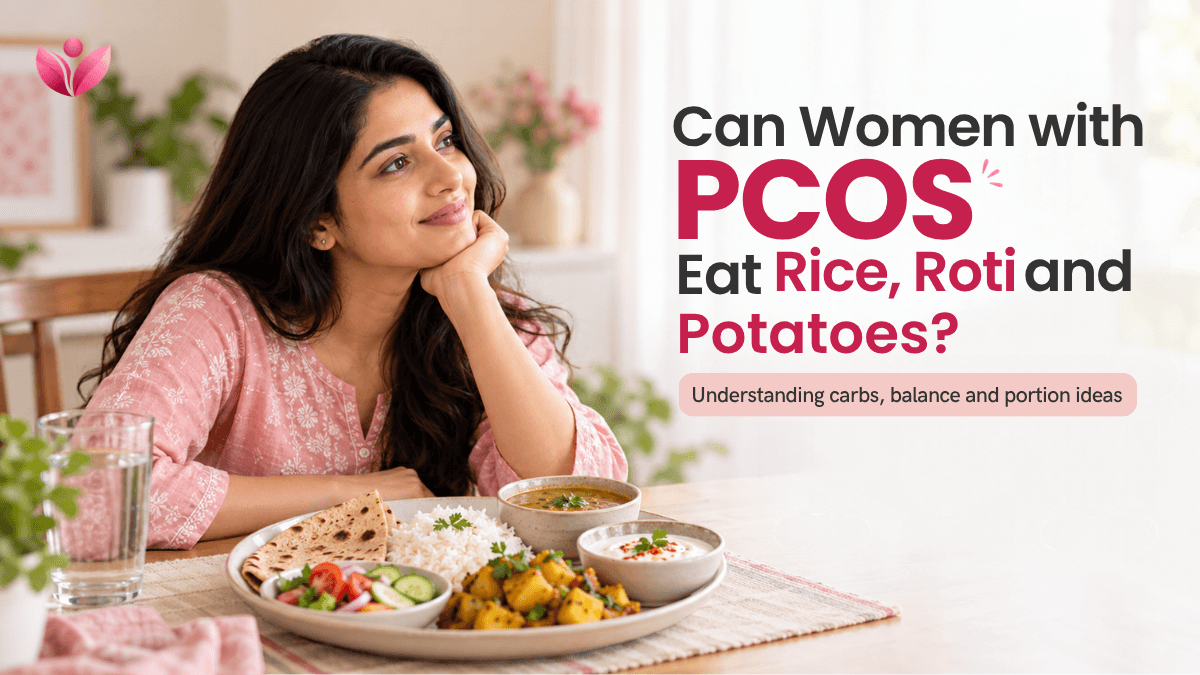
Can Women with PCOS Eat Rice, Roti and Potatoes?
One of the most common questions women ask after being diagnosed with Polycystic Ovary Syndrome (PCOS) is whether they need to stop eating rice, roti and potatoes.
These foods are regular parts of Indian meals, but many women become confused after hearing that carbohydrates and high-glycaemic foods may affect blood sugar levels.
The good news is that women with PCOS generally do not need to completely eliminate these foods. Rice, roti and potatoes can all be included in a balanced diet when consumed in appropriate portions and combined with other nutritious foods.
PCOS is a hormonal condition that can affect menstrual cycles, ovulation, skin health and metabolism. Some women with PCOS also experience insulin resistance, which means their bodies may not respond to insulin as effectively as expected. This can influence how the body manages blood glucose.
However, this does not mean that every carbohydrate food is harmful or that women with PCOS must follow a strict low-carbohydrate diet.
Instead of focusing on avoiding individual foods, it is more useful to understand how to build balanced meals that provide energy, fibre, protein, vitamins and minerals.
1. Understanding the Connection Between PCOS and Carbohydrates
Carbohydrates are one of the body's main sources of energy. They are present in everyday foods such as rice, wheat, potatoes, fruits, milk and several vegetables.
When we eat carbohydrate-containing foods, the digestive system breaks down much of their carbohydrate content into glucose. This glucose enters the bloodstream and provides energy to the body's cells.
Insulin helps move glucose from the bloodstream into cells.
Some women with PCOS experience insulin resistance. In this situation, the body may need to produce more insulin to maintain normal blood glucose levels.
This is one reason why nutrition and meal composition can be important parts of PCOS management.
However, carbohydrates should not automatically be considered unhealthy. Their quality, quantity, preparation and combination with other foods all matter.
For example:
Eating a large portion of plain white rice may provide less fibre and protein than a balanced meal.
Combining rice with dal, vegetables and curd can improve the overall nutritional quality of the meal.
Choosing whole wheat roti instead of refined-flour preparations can provide more fibre.
Eating potatoes alongside protein-rich foods and vegetables can make a meal more balanced.
The aim is to make carbohydrates part of a nutritious meal rather than remove them completely.
2. Can Women with PCOS Eat Rice?
Yes. Women with PCOS can generally eat rice as part of a balanced diet.
Rice is a common staple in Indian households and provides carbohydrates that help meet daily energy requirements.
White rice is not automatically unhealthy, but it generally contains less fibre than less-refined whole-grain alternatives. This is why the overall meal combination and portion size are worth considering.
Tips for including rice in a PCOS-friendly diet:
Combine rice with protein-rich foods such as dal, rajma, chole, paneer or eggs.
Include vegetables such as beans, carrots, spinach, cauliflower or cabbage.
Consider brown rice or other less-refined grains if you enjoy them and tolerate them well.
Avoid making rice the only major component of your meal.
Pay attention to hunger, fullness and individual nutritional requirements.
Example of a balanced Indian rice meal:
A meal could include:
A moderate serving of cooked rice.
One bowl of dal or rajma.
A serving of seasonal vegetables.
Curd, if suitable for you.
A fresh salad.
This combination provides carbohydrates along with protein, fibre and other essential nutrients.
Remember, women with PCOS do not necessarily need to replace white rice with brown rice. The overall quality of the diet is more important than assuming one type of rice is suitable for everyone.
3. Can Women with PCOS Eat Roti?
Yes. Roti can also be included in a balanced PCOS diet.
Whole wheat roti provides carbohydrates, some protein and dietary fibre. It is a familiar and convenient food that can be combined with different protein and vegetable sources.
However, the number of rotis a person needs depends on individual energy requirements, activity levels, appetite and health conditions.
Tips for including roti in your meals:
Prefer whole wheat atta over refined flour for everyday rotis.
Combine roti with dal, chana, rajma, paneer or other protein sources.
Include cooked vegetables or a vegetable-based curry.
Avoid relying only on roti and potato-based dishes for an entire meal.
Choose portions according to your hunger and individual nutritional needs.
Example of a balanced roti meal:
A nutritious lunch could include:
Two medium-sized whole wheat rotis, depending on individual requirements.
One serving of paneer bhurji or chana.
One bowl of mixed vegetables.
A small serving of curd.
This provides a combination of carbohydrates, protein, fibre and fats.
Women who enjoy traditional Indian meals do not need to give up roti to manage PCOS. Making meals more balanced can be a more practical and sustainable approach.
4. Can Women with PCOS Eat Potatoes?
Potatoes are another food that often creates confusion among women with PCOS.
Potatoes contain carbohydrates and provide nutrients such as potassium, vitamin C and vitamin B6. They can be included in a healthy eating pattern when prepared appropriately and consumed in suitable portions.
The method of preparation can make a difference to the overall nutritional value of a potato-based meal.
For example, boiled or lightly cooked potatoes are generally a better everyday choice than frequently consuming deep-fried potato preparations.
Tips for including potatoes in a PCOS-friendly diet:
Prefer boiled, steamed or lightly cooked potatoes.
Combine potatoes with vegetables and protein-rich foods.
Avoid making fried potato snacks a regular substitute for balanced meals.
Include other vegetables to increase the fibre and nutrient content of your meal.
Pay attention to portion sizes, particularly if you have insulin resistance or blood glucose concerns.
Example of a balanced potato meal:
You could prepare a meal with:
A moderate portion of boiled potato.
Chana or another protein-rich food.
A serving of cucumber, carrots and other vegetables.
Curd or another suitable protein source.
Potatoes do not need to be completely removed from your diet simply because you have PCOS.
5. Why Food Combinations Matter More Than Avoiding Individual Foods
One important principle of PCOS nutrition is understanding that foods are usually consumed as part of meals rather than individually.
Eating carbohydrates alongside protein, fibre and healthy fats can influence digestion, fullness and the blood glucose response.
For example, compare these two meals:
Meal A:
A large serving of plain white rice.
Meal B:
A moderate serving of rice.
Dal.
Mixed vegetables.
Curd.
Meal B provides a wider range of nutrients and a more balanced combination of food groups.
Similarly, eating roti with paneer, vegetables or dal is generally more nutritionally balanced than eating several rotis without any meaningful protein or vegetable accompaniment.
This does not mean every meal needs to follow a perfect formula. It simply means that combining different food groups can improve overall meal quality.
6. Understanding Portion Sizes Without Following Strict Food Rules
Portion sizes are an important consideration when planning meals for PCOS.
However, there is no single portion size that works for every woman.
Your nutritional requirements may depend on:
Age and body composition.
Daily physical activity.
Energy requirements.
Insulin resistance.
Blood glucose levels.
Other medical conditions.
Pregnancy or breastfeeding needs, where applicable.
A physically active woman may have different carbohydrate requirements from someone with a sedentary routine.
Instead of following restrictive food rules, try to build meals that include different food groups.
A simple balanced plate approach: